AI ads work best when they sell the product.
In a 2026 test of ads from ten brands, the AI versions of the Febreze, Herbal Essences and Cheerios ads outscored the ones people made. On average, the ads people made still scored higher. Here is what the research found, and how we make AI ads that sell.
Updated November 2026 · Sources checked
Made with InstantClips
Do AI ads work?
AI-generated ads work, and they work best when they sell a product directly. Ipsos and Syracuse University took ten ads from big brands, rebuilt the brief behind each one, and had AI make a new version from it with no human editing. They tested all twenty ads with 3,000 people in the United States.1
On average, the ads people made were 14 percent stronger on short-term sales potential, and 17 percent stronger at building the brand. The researchers called the AI ads “good enough”.1
The average hides a pattern. The AI ads that did best sold the product directly.2 The AI versions of the Febreze, Herbal Essences and Cheerios ads outscored the ones people made. Chewy’s holiday story, the most emotional ad in the test and the strongest of all twenty, came out average in its AI version.1
Herbal Essences
Cheerios
Febreze
Chewy
Ipsos’s Creative Effect Index, its measure of an ad’s potential to drive short-term sales, for four of the ten brands. Ipsos and Syracuse University, 2026.1
Ipsos drew the same lesson. It advises leaning on AI for ads that sell a product, and keeping people at the centre of brand stories.1 An ad that sells a product is the kind InstantClips makes.
Real campaigns have been kinder to AI. Meta reports that campaigns using its AI ad tools had an 11 percent higher click-through rate and a 7.6 percent higher conversion rate than campaigns without the tools.3 In 2026 it said its AI video tools lifted conversion rates in its tests.4 And in a field experiment on WhatsApp, videos that AI made for each of a brand’s existing customers drew more engagement than personalised pictures or one video sent to every customer.5
Which Christmas ads were made with AI?
Coca-Cola has made its Christmas ad with AI three years running, in 2024, 2025 and 2026. McDonald’s in the Netherlands made one in 2025 and pulled it within days, after a backlash on social media.6,7
In 2026 the argument reached fashion. Dior promoted its holiday film as drawn by hand, and viewers accused it of using AI. Its director denies that AI made the artwork, and says software drew some of the frames between the drawings.8 Prada called its own holiday campaign “Drawing Prada: Animated by Hand”.9
Coca-Cola took criticism online, and most viewers liked the ads anyway.10 System1, which scores ads by how they make people feel, gave the 2024 and 2025 ads its top score.11,12 Most viewers of the 2025 ad never noticed the AI. Gen Z was the exception, and scored the ad far lower.13
Every one of these is a brand film, meant to make people feel something about a name they already know. Your ad has a plainer job. It has to stop someone who is scrolling, show them your product and give them a reason to buy.
Can people tell an ad is AI?
In the 2026 Ipsos test, most viewers could not tell which ads AI had made.1 In a study of image ads on a display network, seen more than 16 billion times, raters took more than 45 percent of the AI images for the work of people.14
What matters is whether the ad looks made by AI. In the same study, AI ads that looked as if a person made them got more clicks than ads people really made. AI ads that looked AI-made did no better than ads made by people. Very strong, saturated colour made an ad look AI-made. Bigger faces and better-looking pictures made an ad look like a person’s work.14
What is AI slop?
AI slop is low-quality content that AI turns out in bulk. Merriam-Webster made “slop” its word of the year for 2025, and defines it as “digital content of low quality that is produced usually in quantity by means of artificial intelligence”.15 In an ad, slop is the AI look viewers notice. In 2024, NielsenIQ found that viewers spotted most of the AI ads it showed them, and found them more annoying, boring and confusing than other ads.16
Our checkers go over every InstantClips video for that look before it reaches you.

Aloe vera drink
Polo shirt
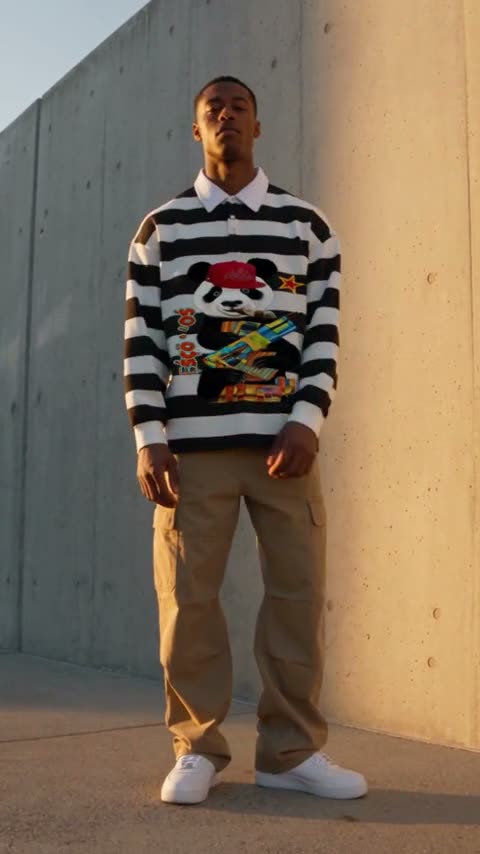
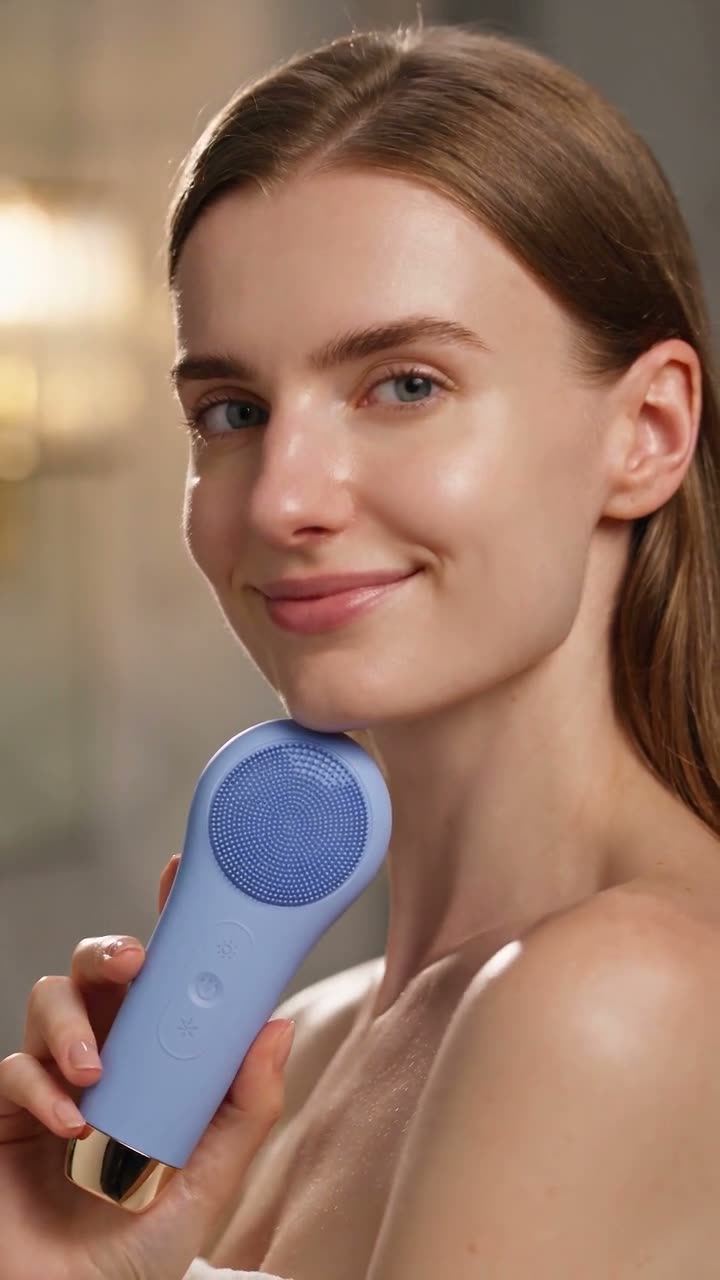
Both have natural colour and a face you can see clearly. In the display-ad study, those made an image look like a person’s work.14 They are stills from two ads InstantClips made.
Do you have to label an AI ad?
TikTok asks you to label an ad made with AI, and Meta labels the AI ads it can identify. TikTok’s ad policy says an ad made by AI, or changed by it beyond small edits, carries TikTok’s AI label or a clear disclaimer of your own. Adjusting the colour or replacing the background counts as a small edit. TikTok rejects or restricts an AI ad it finds without a label.17
Meta adds an “AI info” label to ads made with its own AI tools, and to ads it detects were made with other AI tools. Advertisers have to disclose AI themselves only when an ad about politics, elections or social issues uses realistic AI images or video.18
Every video InstantClips makes carries C2PA Content Credentials, the open standard that records a file’s origin and its edits.19 Ours records that AI made the video. Meta reads that record, so it adds the label for you.18 On TikTok, turn on its AI label when you upload the ad. Its ad policy asks for one on every AI ad.17
In a study from NYU and Emory, ads made entirely by AI raised click-through rates by up to 19 percent over ads made by experts, and telling people an ad was AI-made cut click-through rates by up to 31.5 percent.20 Label the ad as each platform asks all the same. What you control is everything else the ad shows.
Meta
Reads the video’s Content Credentials and adds its “AI info” label for you.
TikTok
Turn on its AI label when you upload the ad.
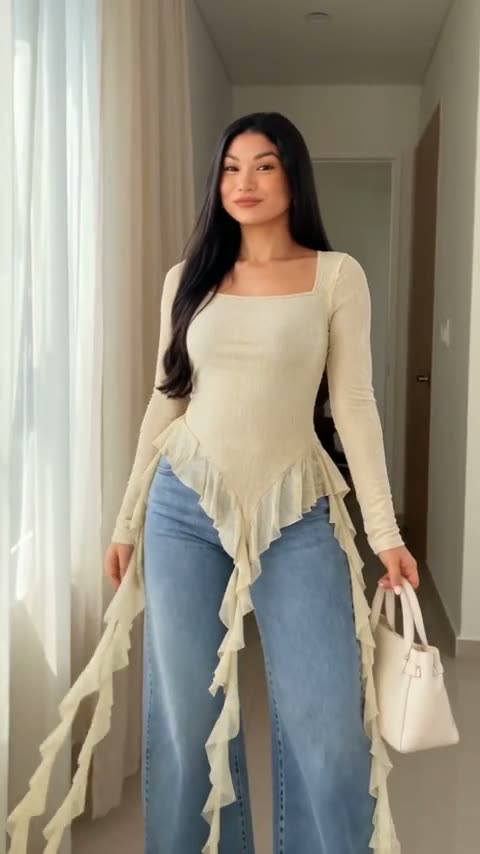
Stills from two ads InstantClips made. Each video carries its own Content Credentials.
What makes an AI ad work?
An AI ad works when it sells the product, looks made for the feed and shows the real product.
Selling the product comes first. The AI ads that held their own in the Ipsos test had a clear problem, a clear fix and a reason to believe.1 The top ads in our study of 1,000 top ads work the same way. Half open on a claim about the product, and two in three end by asking for the sale.
The ad also has to look made for the feed. AI ads that looked as if a person made them won more clicks than ads people really made.14 In our study, 91 percent of the top TikTok ads look as if a person shot them on a phone.
And the ad has to show the real product. A shopper buys what the ad shows. When the shape, the colour or the label is wrong, the ad sells something you do not stock.
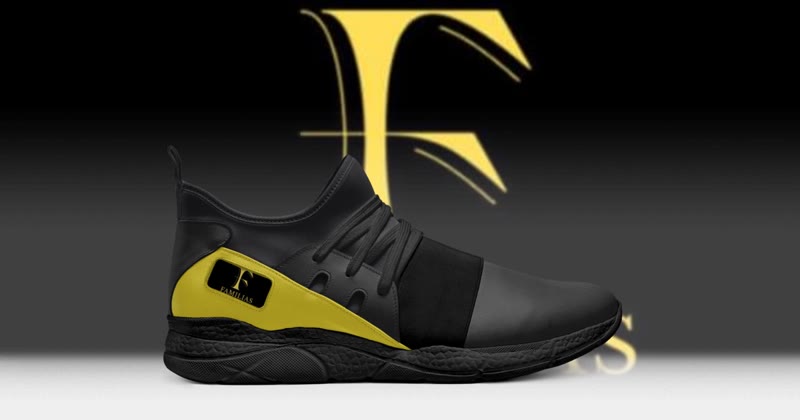
The listing
The store’s photo shows a black knit runner with a yellow side panel.
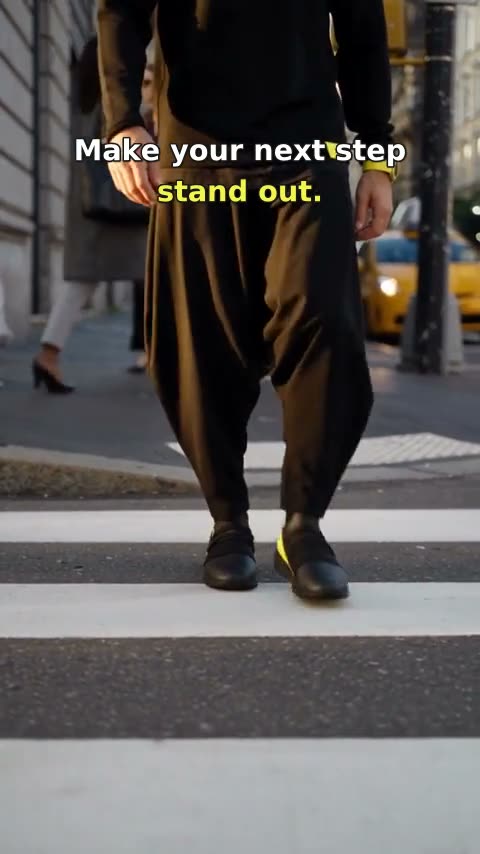
A claim
The first line promises the shoes will get you noticed.
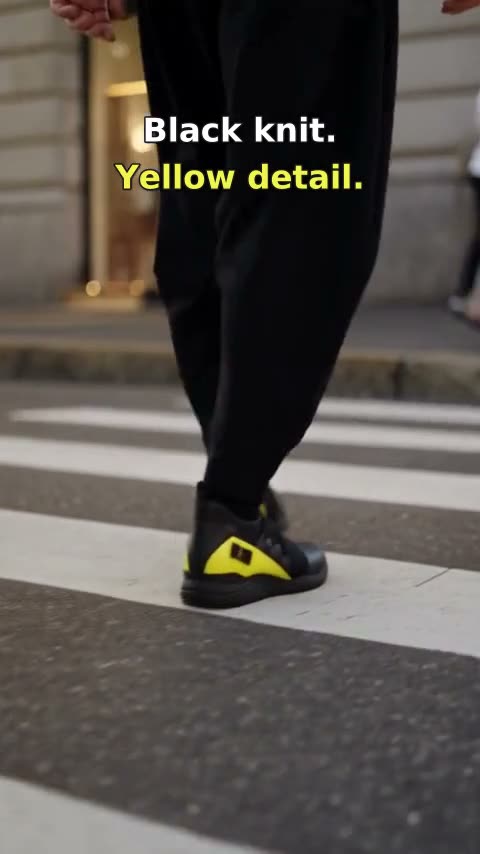
The product
Up close, the ad shows the same black knit and yellow panel.
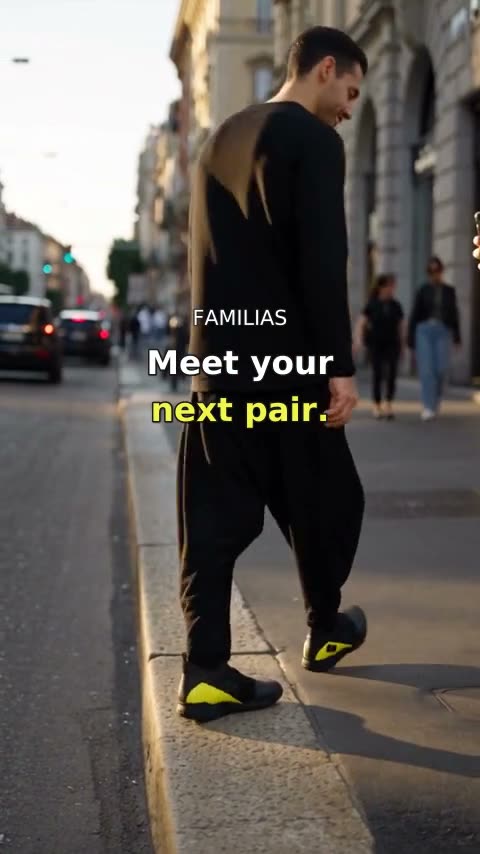
The ask
It ends by inviting you to meet your next pair.
Frames from the ad InstantClips made from the FAMILIAS product page.
It looks like your product, because it is.
Give us your product page or a few photos. We write the script for you to read, and then we make the ad.
We make AI ads that sell your product.
InstantClips makes the kind of AI ad that did best in the research: a video that shows your product and says what it does. Paste a product link or upload photos. You don’t need to learn prompts.
- We write the script from the top ads. We keep studying the ads that perform best on social, and every script follows what we learn: a claim up front, what the product does, and the ask at the end. You read the script before anything is made, and change any line you like.
- We show your real product. We use your product photos, so every shot shows the real thing, with the same shape, colours and label.
- We make it look at home in the feed. Ask for the look of a video shot on a phone, and we make the ad that way.
- We check every video for slop. Our checkers go over each one before it reaches you. They look for a product that has drifted from your photos, and for words on screen that do not read right.
- We label it for you. Every video carries Content Credentials that say AI made it, so Meta can add its label for you.
- We make several ads for each product. You choose the ones worth running, and the next one is ready before a running ad tires.
See what we make for every kind of product, how to make an ad with AI step by step, and what it costs.

Sources 20
- 1 Adam Peruta and Carrie Riby (Syracuse University) with Nate Cummings and Nate Pascale (Ipsos), “AI Ads Are Good Enough — And That’s the Problem”, Ipsos, May 2026: ten 30-second ads from ten brands, and an AI version of each made from a brief rebuilt from the original with no human post-production, tested with 3,000 people in the United States. On average, “human-made ads are 14% stronger on short-term effectiveness” and 17 percent stronger on long-term effectiveness (page 10); “Only 25% of AI ad viewers” were at least somewhat confident the ad was AI-made (page 8). Creative Effect Index scores for Febreze and Herbal Essences on page 11, Chewy on page 13 and Cheerios on page 14; the advice to “Lean more on AI-led creative for lower funnel product work” on page 15. Ipsos report (PDF)
- 2 Adam Peruta, “Research: AI-Generated Ads Perform Worse Than Human-Made Ones—Even When Customers Can’t Tell Them Apart”, Harvard Business Review, 3 September 2026: the AI ads were “14% weaker on short-term sales potential” and 17 percent weaker on long-term brand equity, and the most effective of them were product-driven and direct. Harvard Business Review
- 3 Meta, “Meta’s AI Product News from Connect”, 25 September 2024: on average, campaigns using Meta’s generative AI ad features had an “11% higher click-through rate and 7.6% higher conversion rate” than campaigns that did not. Meta Newsroom
- 4 Meta, first-quarter 2026 earnings, prepared remarks, 29 April 2026: advertisers using its video generation tools saw “more than 3% higher conversion rates in tests”. Meta Q1 2026 remarks (PDF)
- 5 Anuj Kapoor and Madhav Kumar, “Frontiers: Generative AI and Personalized Video Advertisements”, Marketing Science 44(4), July 2025: in a field experiment with a brand’s existing customers, personalised videos made with AI raised engagement “by six to nine percentage points” over personalised images and a generic video. Marketing Science
- 6 Niamh Carroll, “Coca-Cola’s CMO on why it won’t chase the next ‘shiny object’ at Christmas”, Marketing Week, 11 November 2026: “For the third year in a row, the brand has created an AI-generated version” of its “Holidays Are Coming” ad. Marketing Week
- 7 Elmira Aliieva, “Not lovin’ it: McDonald’s pulls AI-generated Christmas ad after social media backlash”, NBC News, 11 December 2025: a 45-second ad posted to McDonald’s Netherlands’ YouTube channel and removed within days. NBC News
- 8 Jarrod Jones, “The Triplets Of Belleville director says AI wasn’t used to generate artwork for his Dior short”, The A.V. Club, 7 November 2026: Sylvain Chomet denies that generative AI made the artwork, and describes the interpolation software used as “automating the repetitive, mechanical part of animation”. The A.V. Club
- 9 Prada, “Drawing Prada: Animated by Hand”, Holiday 2026 campaign: “A Prada fantasy, created by hand”, with animation direction by John Pomeroy. Prada
- 10 Chris Kelly, “Naughty or nice? Coca-Cola doubles down on AI in new holiday campaign”, Marketing Dive, 3 November 2025: a refreshed “Holidays Are Coming” developed with generative AI, after the previous year’s version “was a source of controversy”. Marketing Dive
- 11 Melissa Rosenthal, “Holiday Highlights: The Ads That Sleigh the Season”, System1, 10 December 2024: Coca-Cola’s AI-made “Holidays Are Coming” rated 5.9 stars, first in System1’s top ten of the season. System1, 2024
- 12 Tom Ewing, “AI or No AI, Coke Gets the Christmas Love”, System1, 20 November 2025: the 2025 version rated 5.9 stars, the highest score System1’s test gives. System1, 2025
- 13 Genevieve Norris, “4 Festive Themes from 2025”, System1, 17 December 2025: Coca-Cola’s ad rated 5.9 stars with mass audiences, 2.2 among Gen Z men and 2.5 among Gen Z women; on the AI, “most didn’t even notice”. System1, Gen Z
- 14 Yannick Exner, Jochen Hartmann, Oded Netzer and Shunyuan Zhang, “AI in disguise: How AI-generated ads’ visual cues shape consumer perception and performance”, working paper, January 2025: display ads with more than 16 billion impressions between them; AI ads that do not look AI-made beat human-made ads on click-through rate, AI-looking ones do not, and raters judged more than 45 percent of the AI ads to be made by people. Vivid colour saturation reads as AI; larger faces and more attractive images read as human. Columbia Business School (PDF)
- 15 Merriam-Webster, “2025 Word of the Year: Slop”: “We define slop as ‘digital content of low quality that is produced usually in quantity by means of artificial intelligence.’” Read 13 November 2026. Merriam-Webster
- 16 NielsenIQ, “NIQ Research Uncovers Hidden Consumer Attitudes Toward AI-Generated Ads”, 12 December 2024: more than 2,000 participants, about 150 of them measured with EEG, identified most of the AI-generated ads and found them more “annoying,” “boring,” and “confusing” than traditional ads. NielsenIQ
- 17 TikTok Advertising Policies, “Misleading and false content”, last updated April 2026: significantly edited or AI-generated content must carry the AIGC label or the advertiser’s own clear disclaimer; adjusting colour and “Removing or modifying backgrounds” count as insignificant edits; an ad with undisclosed AI content “will be rejected or restricted”. TikTok Ads help
- 18 Meta Business Help Centre, “About AI info on ads created or edited with generative AI tools”: Meta applies an “AI info” label to ads made or significantly edited with its own generative AI tools, and to ads it detects were made with other tools through standards such as C2PA; advertisers must disclose photorealistic AI media in ads about social issues, elections or politics. Read 12 November 2026. Meta Business Help Centre
- 19 C2PA, the Coalition for Content Provenance and Authenticity: “an open technical standard for publishers, creators and consumers” to “establish the origin and edits of digital content”, shown to people as Content Credentials. C2PA
- 20 NYU Stern, “The AI Advertising Paradox”, 6 November 2025, on Hyesoo Lee, Anindya Ghose, Vilma Todri and Panagiotis Adamopoulos, “The Impact of Visual Generative AI on Advertising Effectiveness” (working paper): fully AI-generated ads raised click-through rates “by up to 19%” over ads made by human experts, and disclosing AI involvement caused “a 31.5% decrease in click-through rates”. NYU Stern